Originally reported by Biteye on November 16, 2026, at 19:24 (UTC+8). Biteye asked whether Bitcoin’s decline was nearing its end after BTC touched $62,006 on November 15—almost half its October 2025 peak, according to the article. Its proposed window for a sustained recovery is late 2026 through the first half of 2027. That is a reading of past cycles, not evidence that a bottom has formed.
What Biteye says is weighing on BTC
Biteye cites roughly $1.91 billion in net outflows from US spot Bitcoin ETFs over seven trading days through November 13. It also reports that major stablecoin supply fell by about $11.5 billion over the preceding 30 days. Those figures frame its concern that money is leaving the crypto market.
The article recounts several possible explanations offered by CZ: ETF withdrawals; speculation that investors might sell crypto to fund an anticipated Anthropic IPO; inflation and tighter monetary-policy expectations; security incidents; and US regulatory uncertainty. These are proposed explanations, not established causes of the BTC decline. Biteye adds concerns about exchange security, high-yield stablecoin products competing for investors’ funds, and potential future cryptographic risks from AI and quantum computing. Its example of stablecoin products offering 10% annualized returns on allocations exceeding 1 million USDT is a claim about available yields, not a guaranteed return.
Biteye also points to market conditions it sees as obstacles: an expected 64 basis points of US rate increases over the following 12 months, a roughly 5.15% US 10-year Treasury yield, a dollar index above 103, pressure on technology shares, and BTC trading below Strategy’s average purchase cost. The article says potential index changes and tougher financing conditions could constrain Strategy’s future buying; it does not establish that they will.
Why the recovery window remains speculative
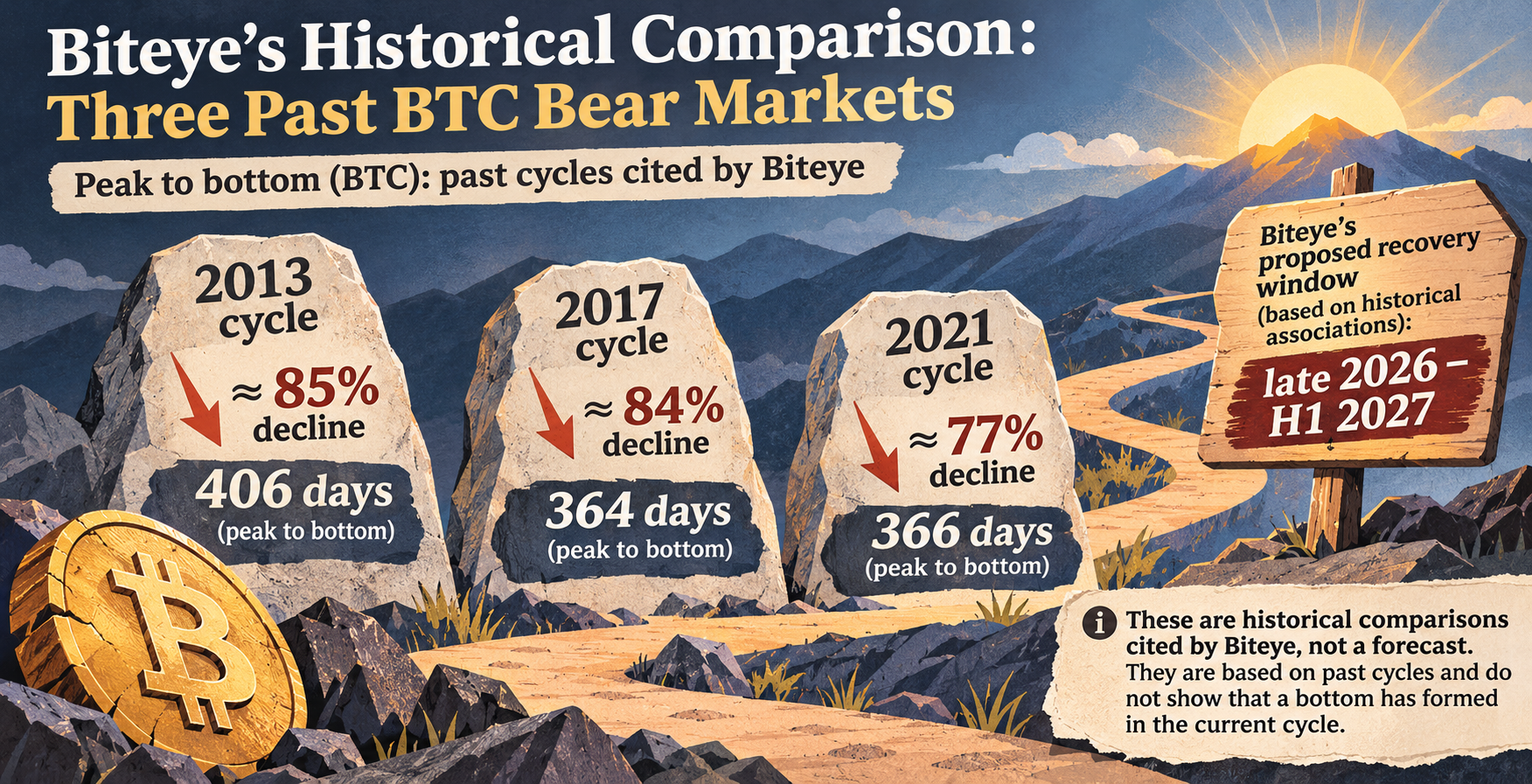
Biteye compares three earlier BTC bear markets: declines of about 85% over 406 days from the 2013 peak, 84% over 364 days from the 2017 peak, and 77% over 366 days from the 2021 peak. With more than 13 months elapsed since the peak it identifies in October 2025, the author argues that this cycle has reached a period when previous bottoms appeared. Three comparisons cannot tell readers where this bottom will be.
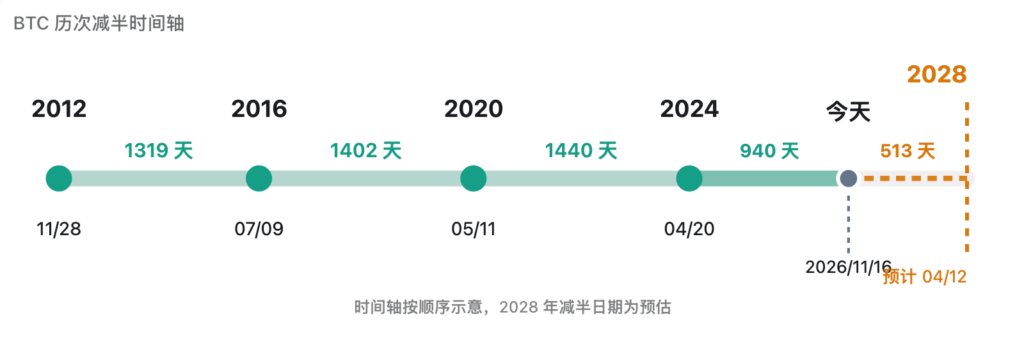
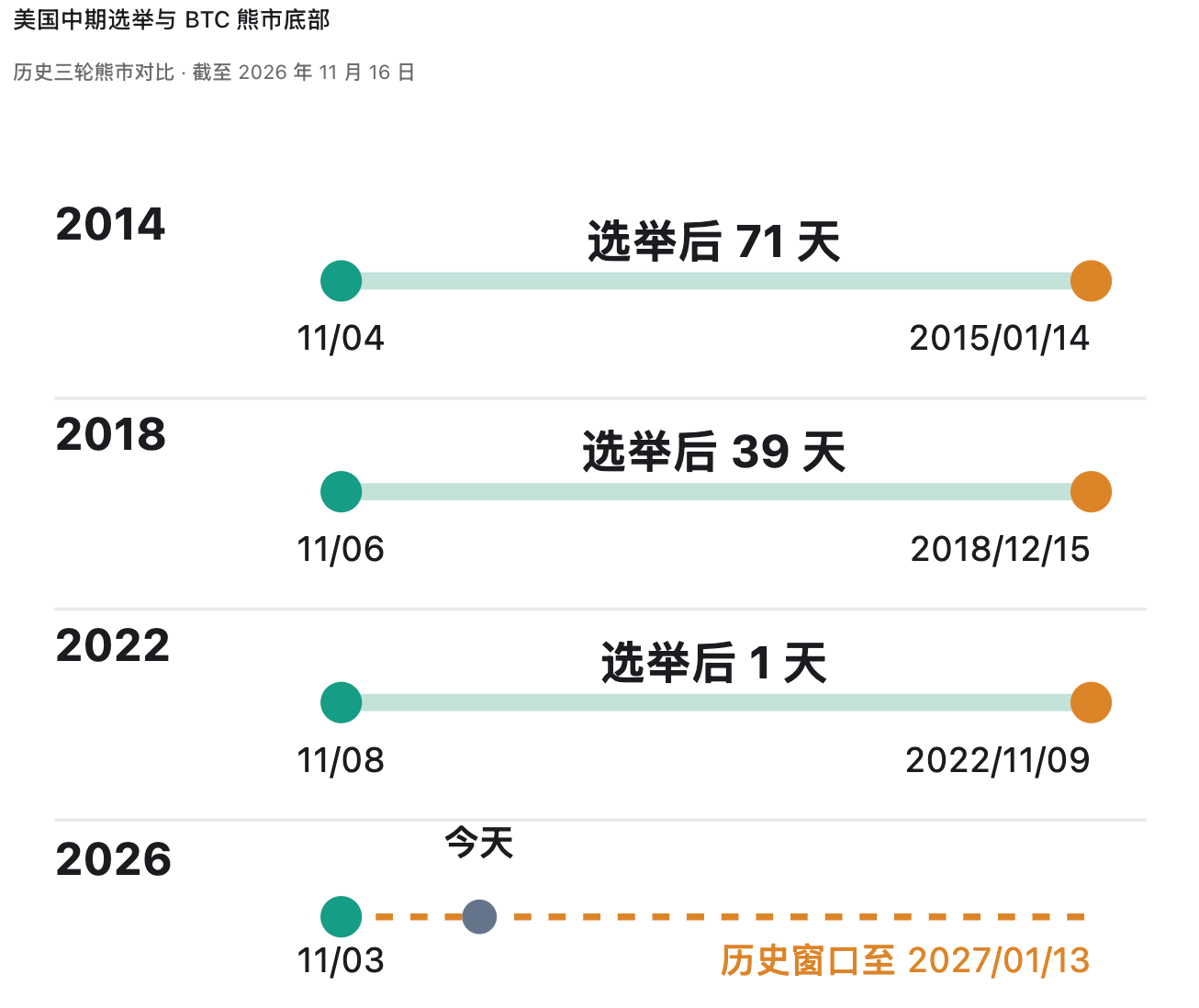
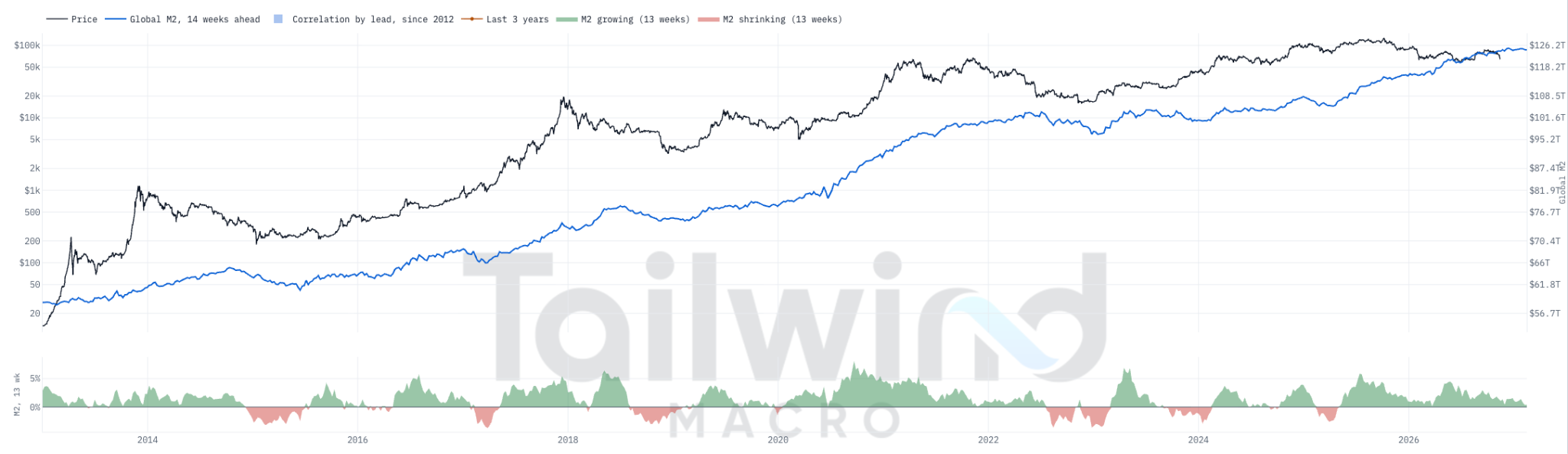
The article offers three further historical signals. It places earlier recoveries roughly 272, 404 and 462 days before Bitcoin halvings, producing a tentative January–July 2027 recovery window. It says the bottoms in 2015, 2018 and 2022 occurred 1–71 days after US midterm elections; it also cites BlackRock’s figure of an average 14.1% S&P 500 gain in the six months after midterms since 1970. Finally, citing Coinbase research, it says changes in global M2 have typically led BTC by about 110 days, suggesting the first quarter of 2027 as another period to watch.
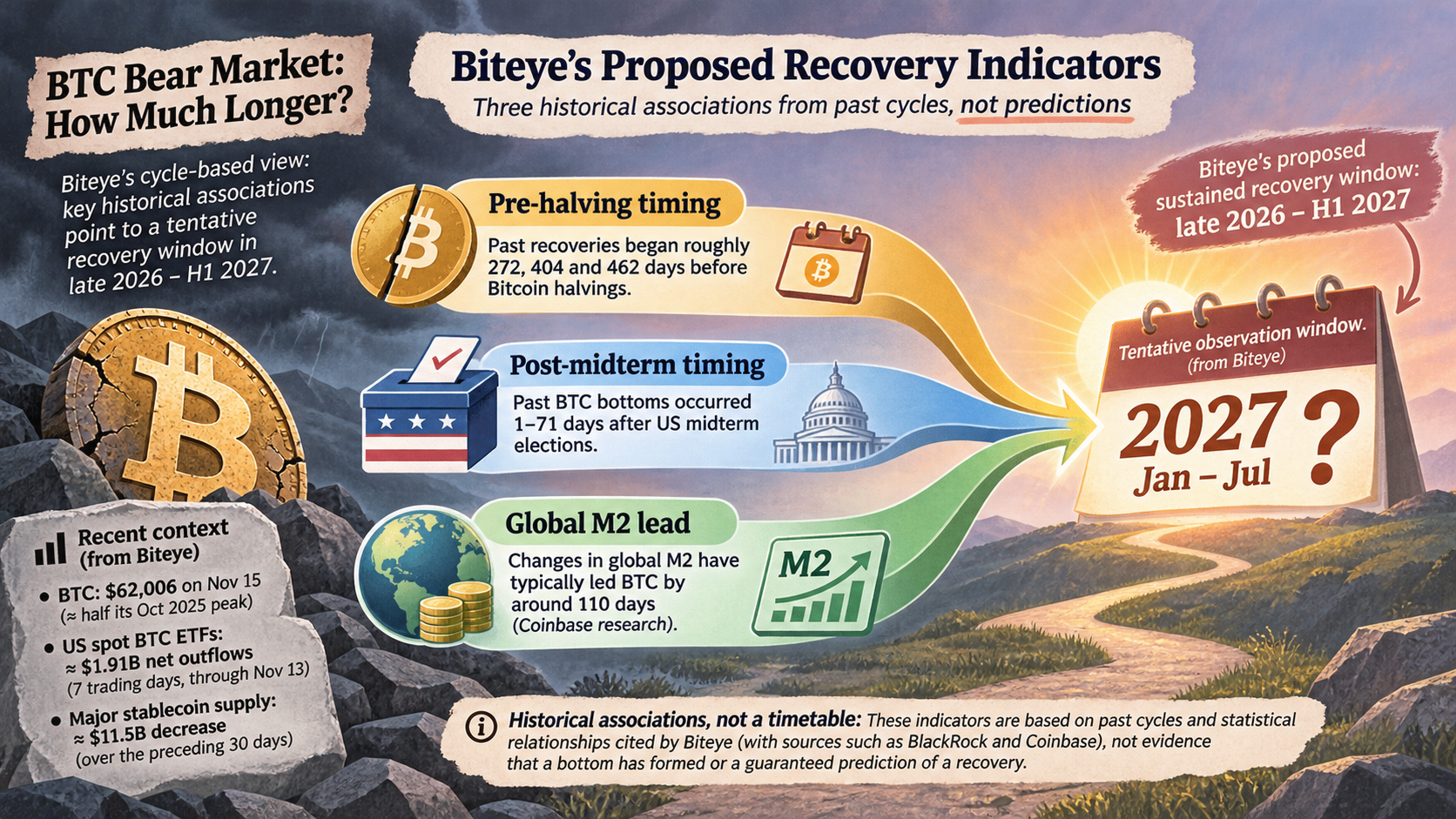
These are attributed historical associations, not a timetable. Biteye itself notes that policy, stock-market weakness and crypto outflows could delay a recovery. It also cites @wolfyxbt’s cycle index as suggesting a new theoretical bull market began in October 2026—a model-based claim that sits uneasily beside the reported November price decline.
Source: panewslab.com (originally published 2026-11-16 19:24 UTC+8)