Historical-source review: Biteye’s analysis was published on November 16, 2026. The prices, market conditions and forecasts below reflect that reporting period, not current conditions.
Biteye argued that Bitcoin could finish forming a bear-market bottom between late 2026 and the first half of 2027. Its case rests on patterns from earlier cycles—but those patterns do not establish when this decline will end.
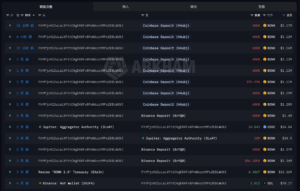
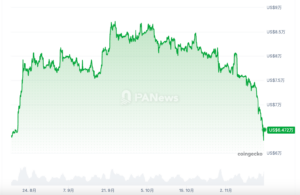
The immediate backdrop was steep: Biteye reported that BTC fell as low as $62,006 on November 15, nearly half its October 2025 peak. It also said US spot Bitcoin ETFs had recorded approximately $1.91 billion in net outflows over seven trading days through November 13.
The case for a bottom—and its limits
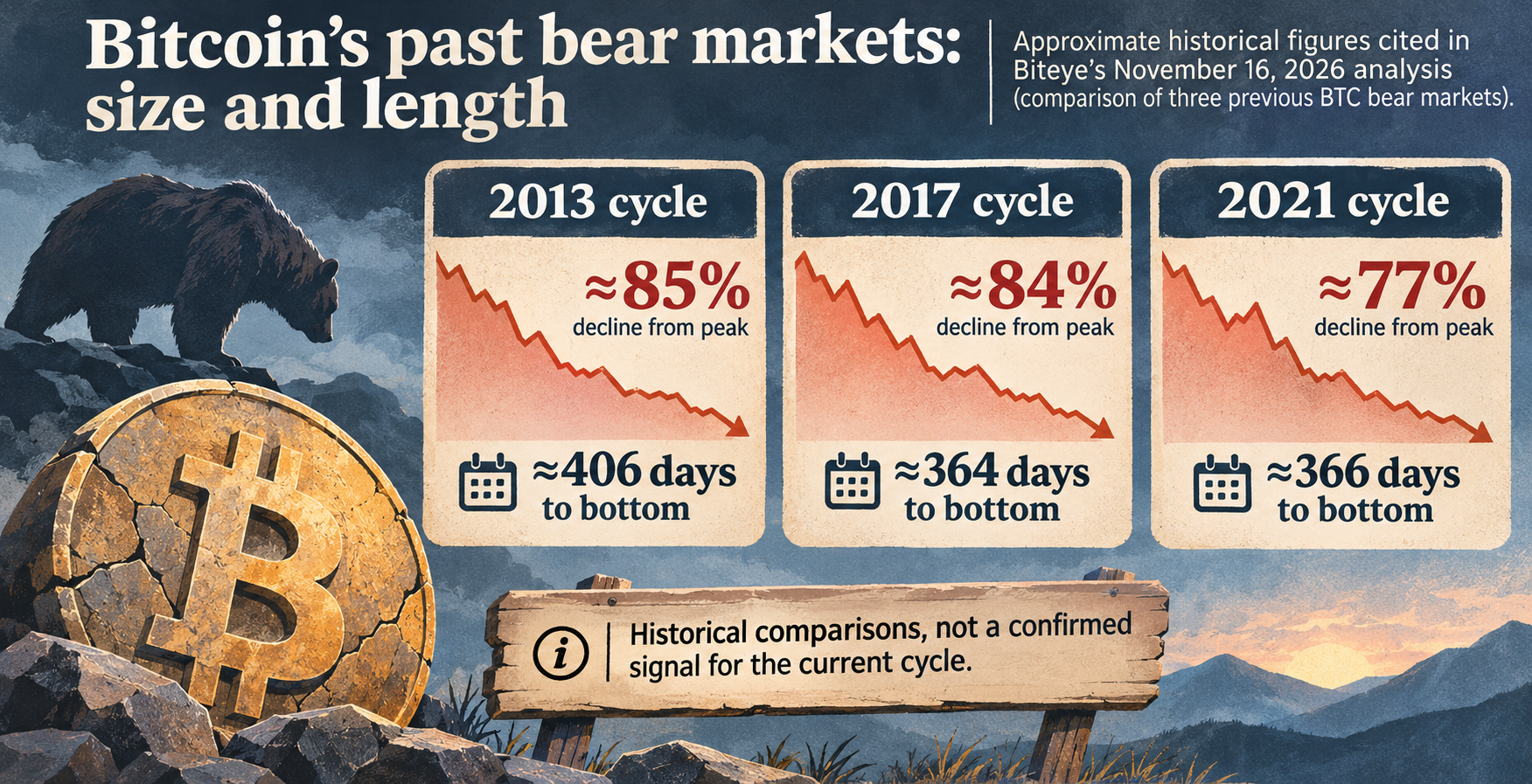
Biteye compared three previous BTC bear markets: declines of about 85% over 406 days in the 2013 cycle, 84% over 364 days in the 2017 cycle, and 77% over 366 days in the 2021 cycle. With more than 13 months elapsed since the October 2025 peak, it argued that this cycle had entered a historically plausible bottoming window. Three precedents, however, cannot pin down a fourth bottom.
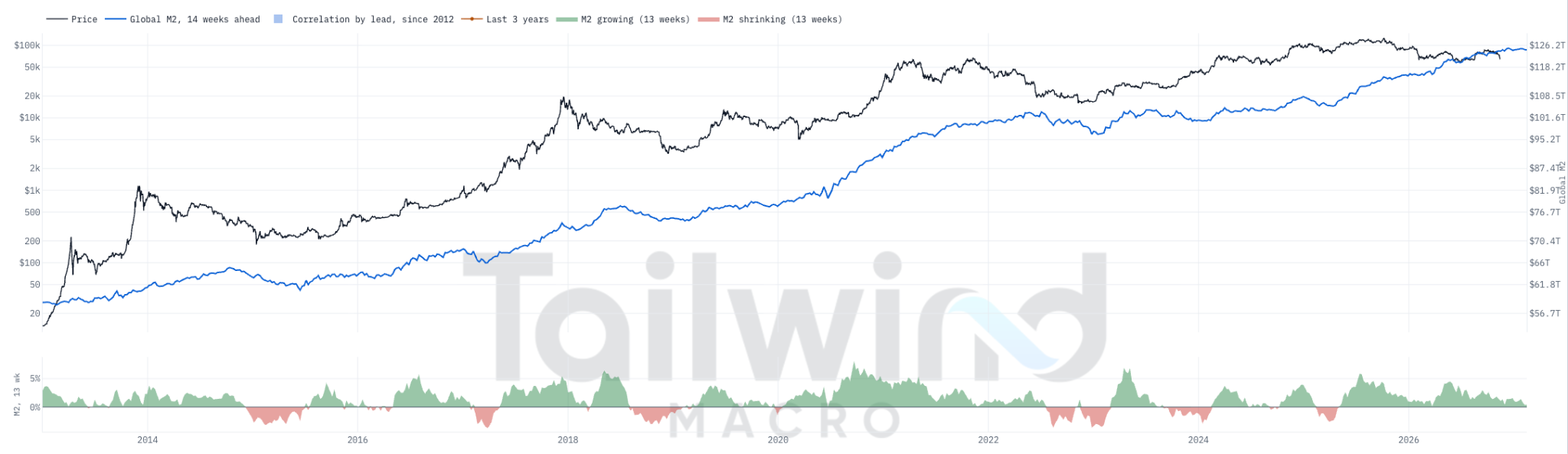
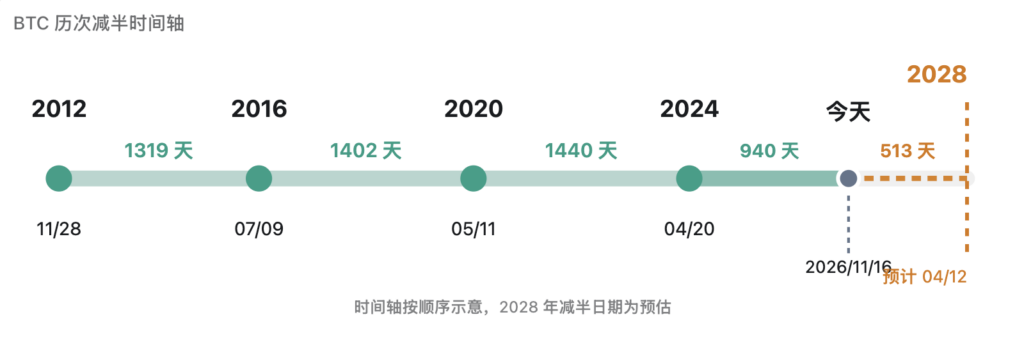
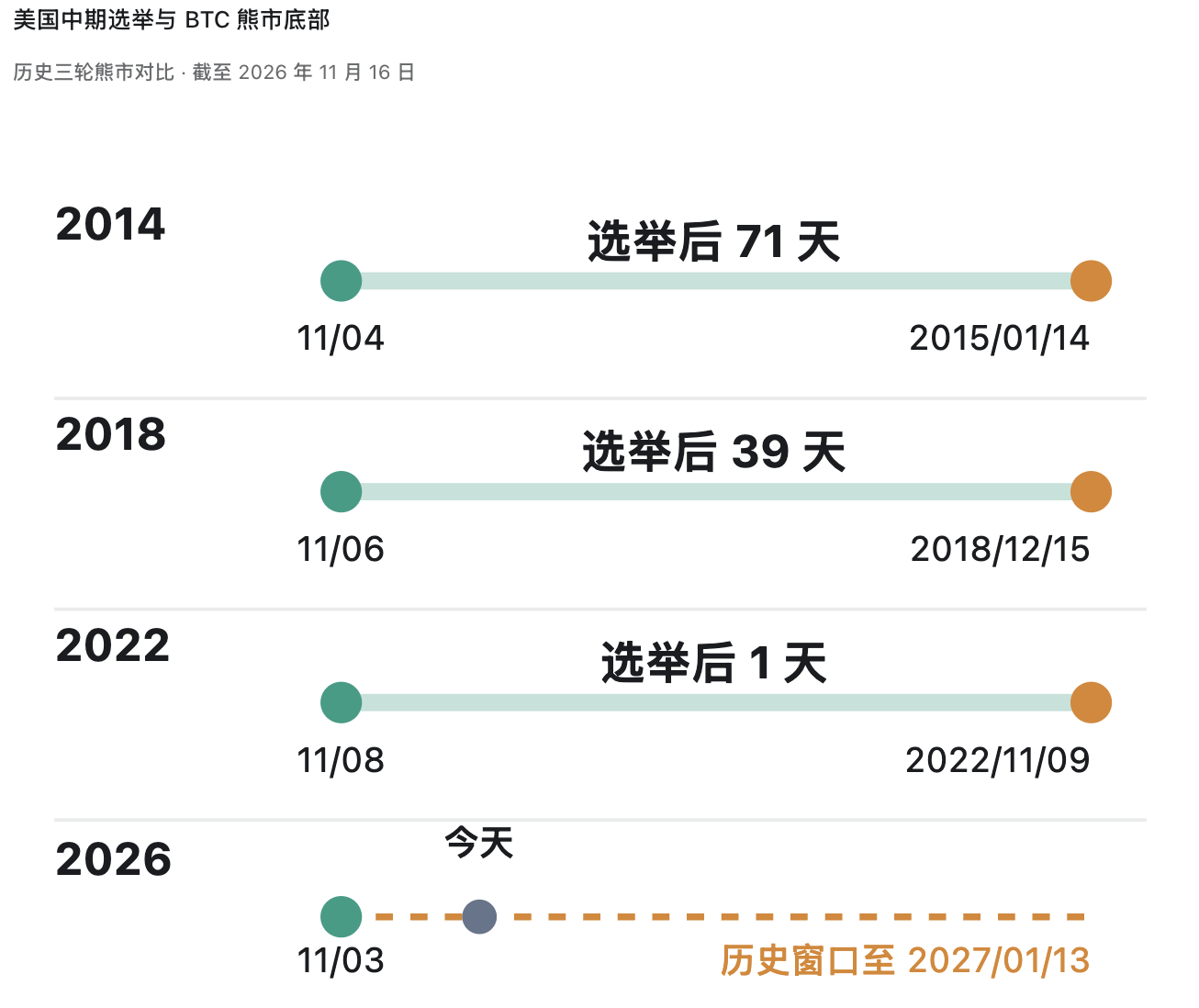
The article offered several other timing guides. Based on recoveries ahead of past Bitcoin halvings, Biteye suggested a possible sustained recovery in January–July 2027. It said the bottoms in 2015, 2018 and 2022 occurred 1–71 days after US midterm elections, and cited Coinbase research suggesting global M2 turning points have historically led BTC by roughly 110 days. On that M2 reading, Biteye identified the first quarter of 2027 as a period to watch. These are historical comparisons and projections, not confirmed signals of an approaching recovery.
What could disrupt the forecast
Biteye also listed reasons the decline could persist: ETF outflows, a reported contraction of roughly $11.5 billion in major stablecoin supply over 30 days, tighter monetary-policy expectations and pressure on institutional buyers. It described expectations of approximately 64 basis points of potential US rate increases over the following 12 months, a US 10-year Treasury yield near 5.15%, and a dollar index above 103. Those were conditions cited in its November 2026 analysis, not live readings.
Other explanations were more conjectural. The article relayed speculation that investors might sell BTC to free funds for a possible Anthropic listing; it did not demonstrate that such selling occurred. It also raised longer-term AI and quantum-computing security concerns, citing Sun Yuchen’s comments, without establishing a present threat to Bitcoin. Its suggestion that some stablecoin products offered nearly 10% annualized “risk-free” returns should likewise be treated as a characterization in the source, not proof that those products were without risk.
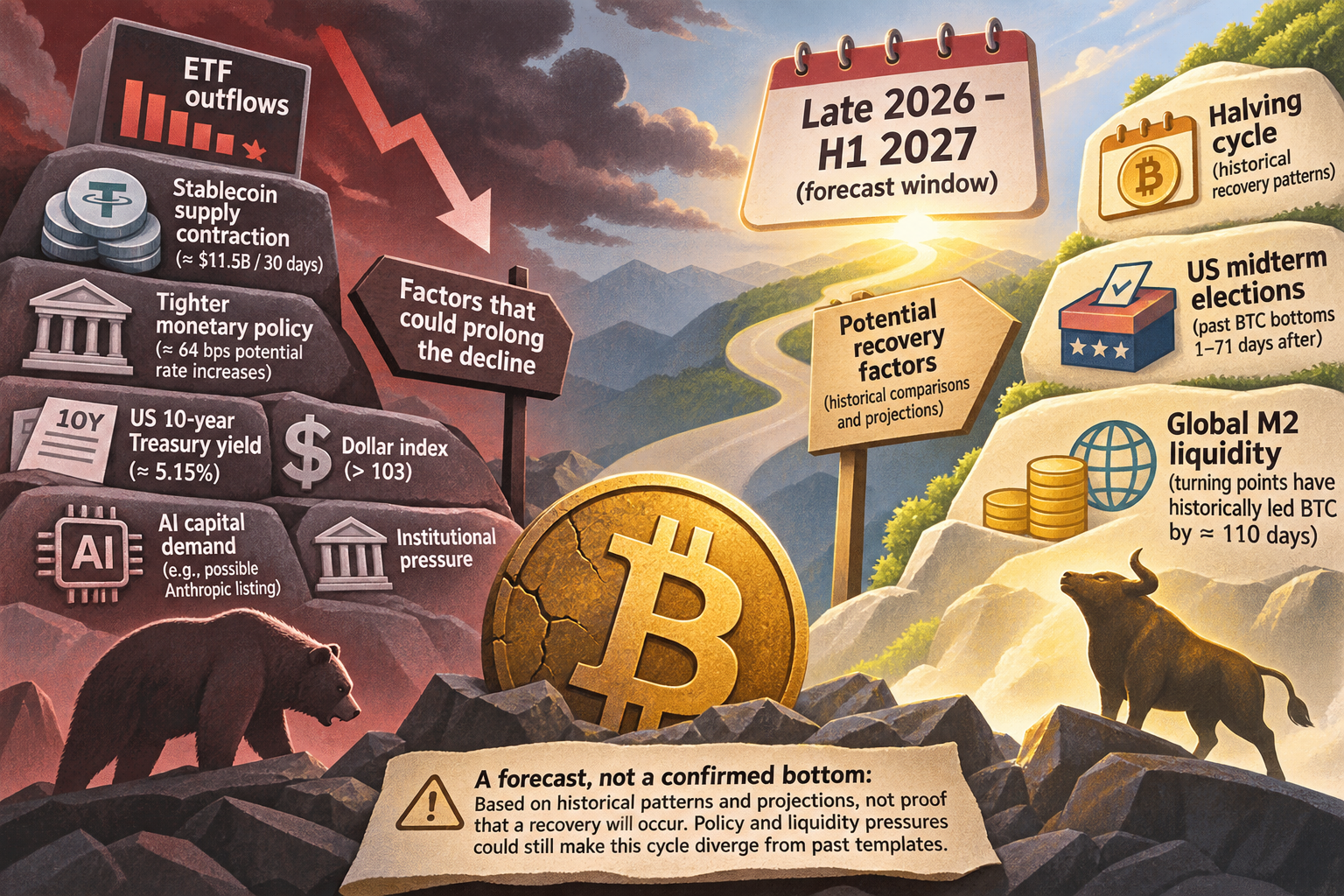
Biteye’s proposed late-2026-to-first-half-2027 window is therefore a forecast, not an observed bottom. The article itself identified unresolved policy and liquidity pressures that could make this cycle diverge from its historical templates.
Source: techflowpost.com (originally published 2026-11-16 18:06 UTC+8)