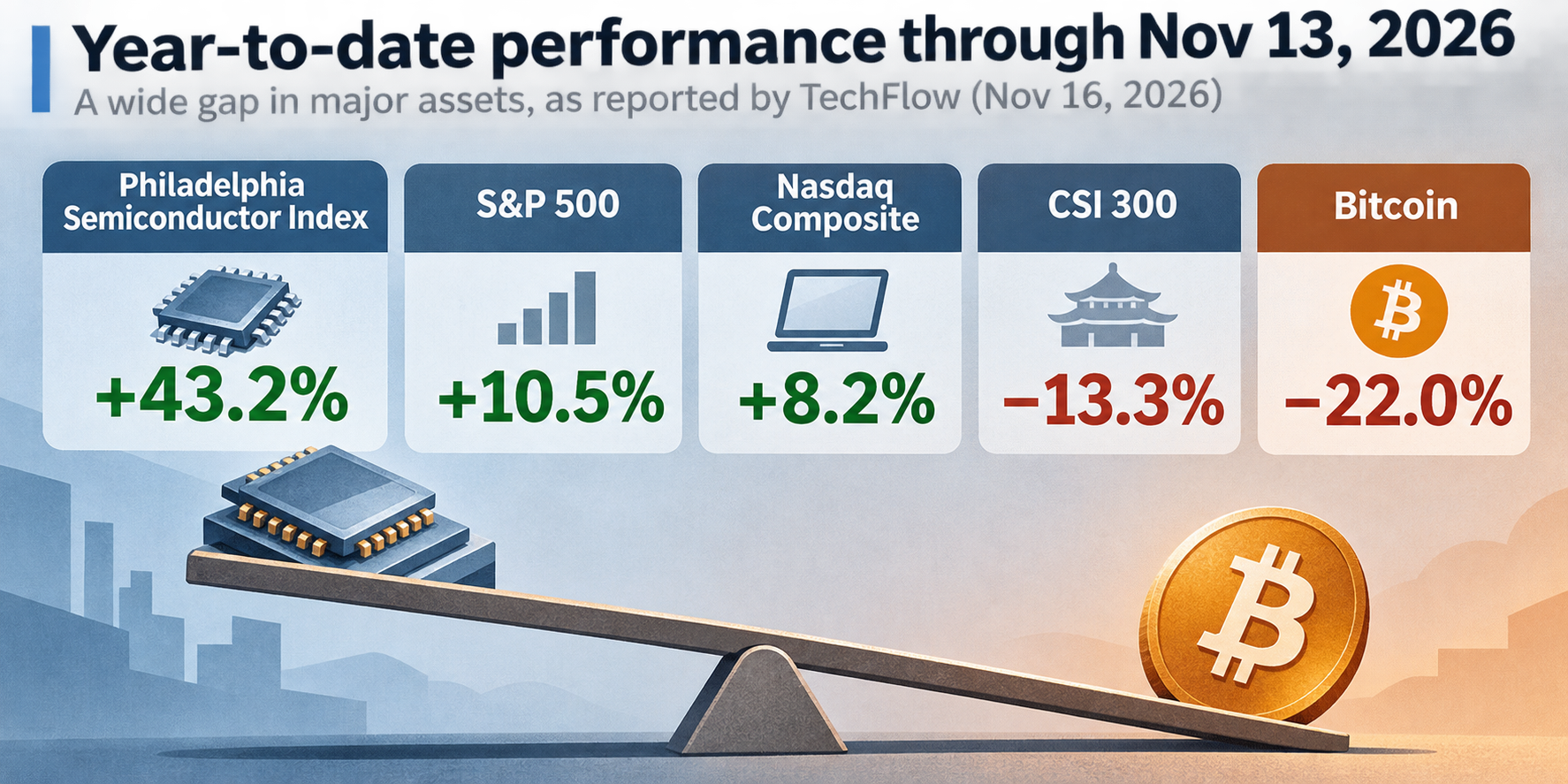
In an article published on November 16, 2026, TechFlow writer Kuli argued that Bitcoin had failed to benefit from the same enthusiasm that lifted technology shares. In the asset comparison cited by the article, Bitcoin was down 22.0% for the year through November 13, while the Philadelphia Semiconductor Index was up 43.2%. The index had reportedly been up 106.6% at its midyear peak.
The gap is the point of the story—not proof of its explanation. TechFlow attributed Bitcoin’s weakness to a lack of sustained new buying and suggested that institutions may sell the readily tradable asset when they need liquidity. It also argued that spot Bitcoin ETF inflows had slowed. The article did not provide flow figures or evidence tying particular Bitcoin sales to institutional cash needs.
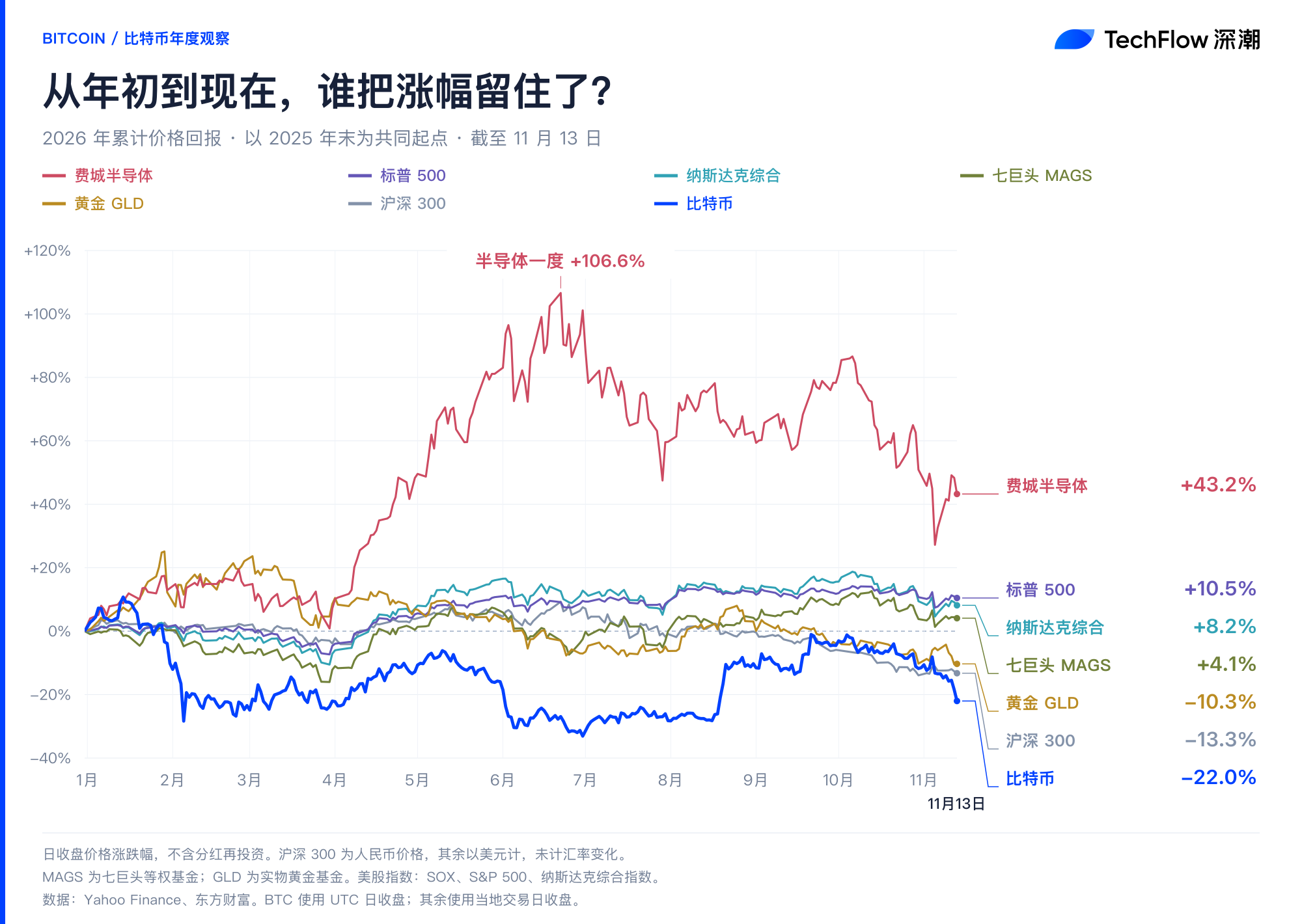
Other returns in TechFlow’s comparison put the S&P 500 up 10.5% and the Nasdaq Composite up 8.2%, while the CSI 300 was down 13.3% and the GLD gold fund was down 10.3%. Those figures challenge the simple pitch that Bitcoin must amplify a technology rally or reliably act as “digital gold.” They do not, on their own, establish why Bitcoin fell—or settle how it will behave in another market period.
Source: techflowpost.com (originally published 2026-11-16 14:38 UTC+8)