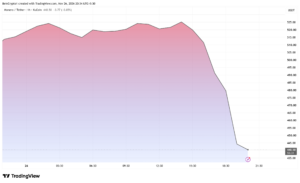
Bitcoin traded near $60,560 just after 1 p.m. ET on November 26, 2026, up roughly 5% from the previous day’s low of $57,500. The rebound left it up 1.39% over 24 hours but down 3.67% for the week, according to Decrypt’s price tracker. The report was published on November 27 at 02:15:29 UTC+08:00.
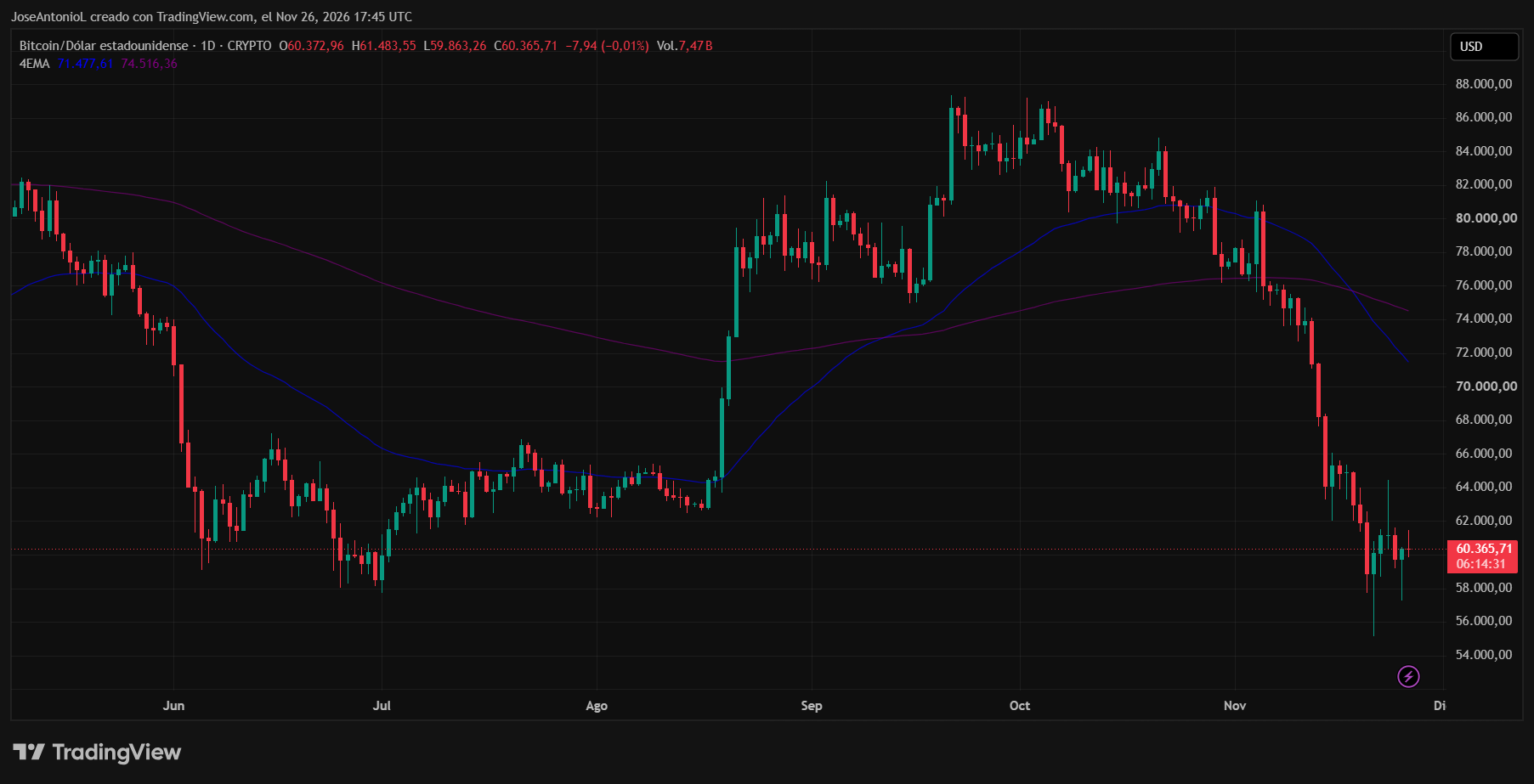
What the death cross showed
On Bitcoin’s daily chart, the 50-day exponential moving average (EMA) had fallen below the 200-day EMA. Traders call that crossover a death cross. Both averages give more weight to recent prices, and both were falling. TradingView charts put the 50-day EMA at $71,478 and the 200-day EMA at $74,516, leaving Bitcoin roughly 16% below the former and 19% below the latter.
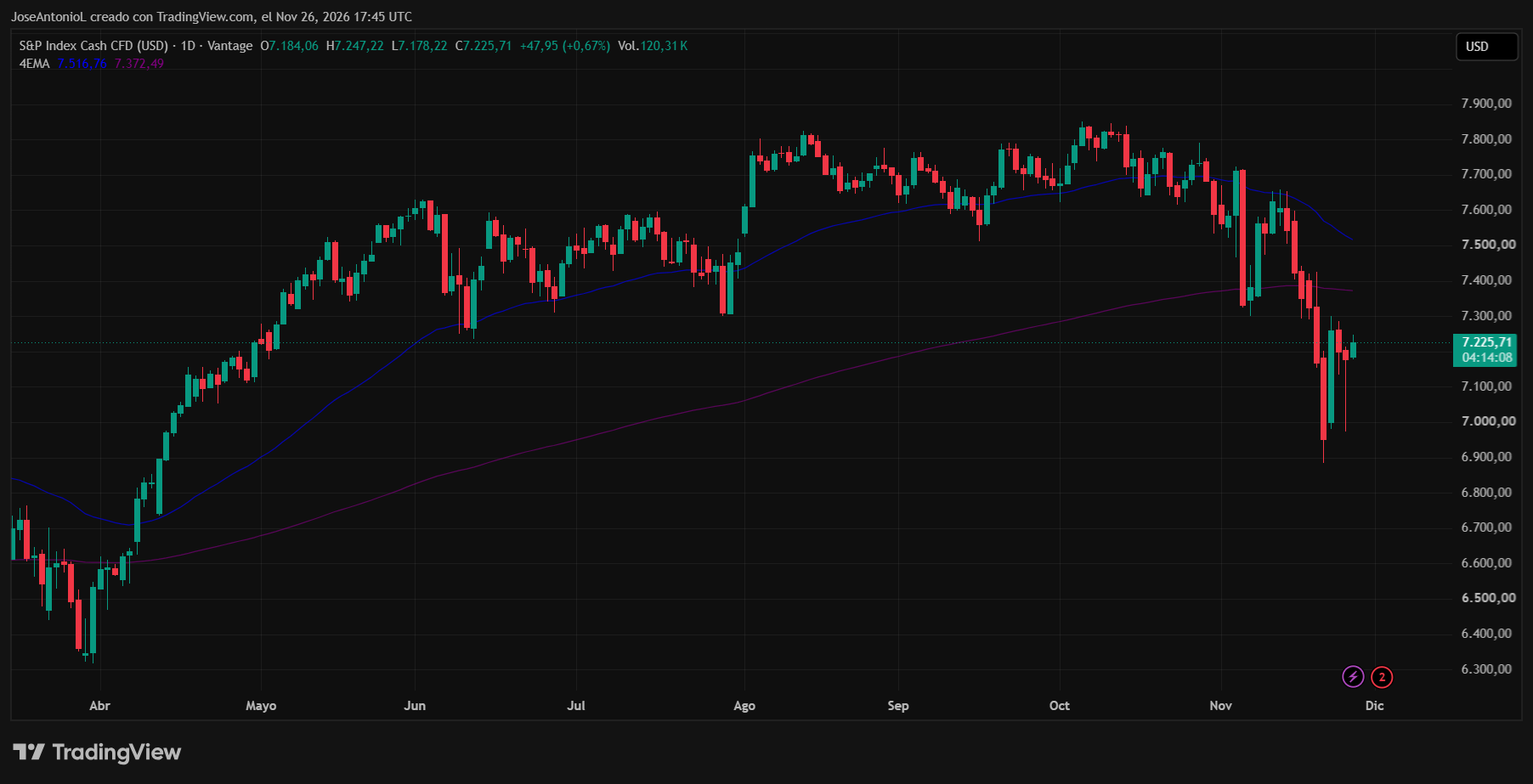
The S&P 500 showed a different pattern, with an important distinction: U.S. stock exchanges were closed for Thanksgiving. It was the S&P 500 contract for difference (CFD), a derivative tracking the index, that rose 0.67% to around 7,226, not the cash index. On TradingView’s daily S&P 500 CFD chart, the 50-day EMA of 7,517 was still above the 200-day EMA of 7,372. That golden cross remained intact, though the gap was narrowing and the contract traded below both averages. Neither crossover predicts the next price move.
The backdrop to the rebound
Ethereum gained 0.87% to just under $1,700 on November 26, while XRP rose 3.1% and Solana gained 2.17%. A day earlier, the Nasdaq Composite had fallen as much as 4.6% intraday before closing down 0.62%. Decrypt reported that the selloff followed stronger-than-expected U.S. economic growth, proposed tariffs and renewed concerns about AI stocks. The Personal Consumption Expenditures price index, the Federal Reserve’s preferred inflation measure, rose 3.8% year over year in October, against the Fed’s 2% inflation target.
For Bitcoin, the chart pointed to possible resistance at $62,000–$64,000. Recent lows of $57,500–$58,500 marked a potential support zone, with November’s low near $55,000 below it. About $7 billion in Bitcoin options were due to expire on Deribit on November 27. Traders showed a stronger preference for contracts offering downside protection than they had in October. U.S. stock trading was also set to resume that day, with the NYSE scheduled to close early at 1 p.m. ET.