Crypto teams deserve more scrutiny for sticking with a product people don’t want than for changing course, blocmates argued in a November 25, 2026 review of 13 projects. Its examples range from ether.fi, which added banking services without abandoning restaking, to Immutable, whose marketing software can serve game studios without a blockchain component at all.
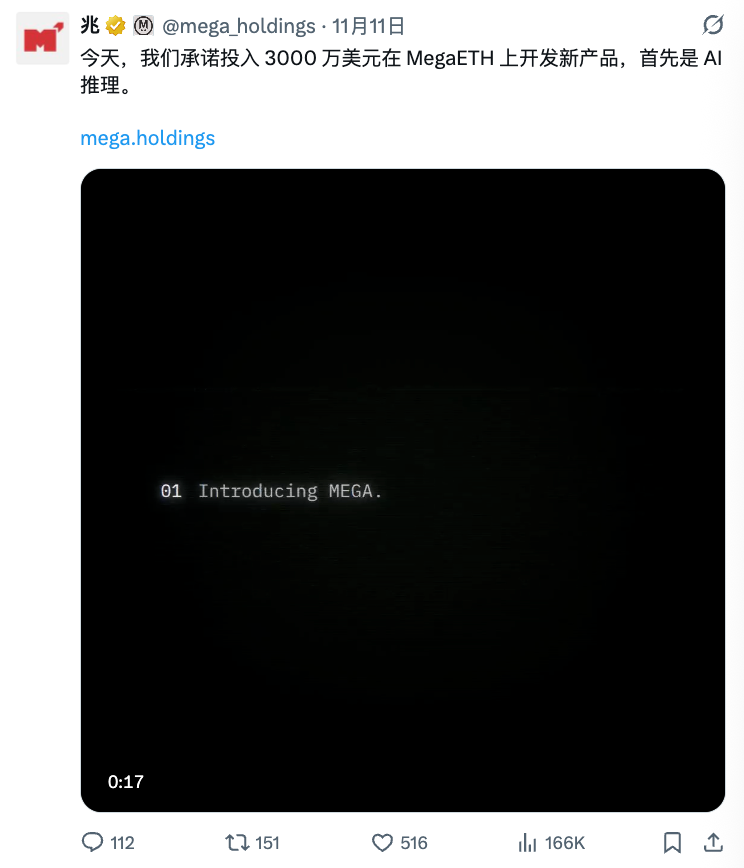
The distinction is what users can actually try. Renzo launched a trading-strategy vault on the day it rebranded. MegaETH committed $30 million to building its own products, but its first application was still scheduled for December. Neither a budget nor a launch, on its own, establishes demand.
Restaking teams find different uses for their capital
Ether.fi started as a liquid restaking protocol integrated with EigenLayer. It still runs that business, but is now better known for its Visa-backed card, yield vaults, lending and borrowing, trading and native stablecoin. Blocmates argued that large treasuries and substantial assets deposited in restaking protocols gave teams room to try new products.
Renzo Protocol, renamed Renzo Finance, is pursuing an asset-management business: it packages trading strategies into vaults and earns management and performance fees. Its first example under the new brand, Renzo Basis on Hyperliquid, runs a delta-neutral basis strategy rather than betting on a market direction. Renzo was also considering other chains and decentralized perpetual-futures exchanges for additional vaults.
Kelp turned to strategy vaults on Gains after a hack. Its proposed stablecoin, KUSD, is a separate undertaking intended to support institutional payments and foreign-exchange settlement. Bedrock, meanwhile, shifted its focus from Ethereum to Bitcoin, which already accounted for most of the value locked in its protocol. Its yield vaults allocate BTC across DeFi, institutional opportunities and delta-neutral trades.
Puffer stayed with infrastructure. It is focusing on preconfirmations and based rollups, arguing that confirmations in roughly 50 milliseconds, with final settlement on Ethereum, could make its system useful to AI agents. Swell took a different route: in April 2026 it announced it would close SwellChain to focus on Faro, a noncustodial AI trading app built on Hyperliquid.
Some chains are building apps. Others are closing
MegaETH is building a product studio alongside its layer-2 network. Its planned flagship, Purified Intelligence, is an AI inference marketplace scheduled to launch in December 2026. OpenRouter and Venice already serve the market; MegaETH’s pitch concerns how buyers compare providers. A third party may run an open-source model more cheaply than its originating lab, but a lower price is of limited use if the buyer cannot verify the model or its data-handling terms. MegaETH aims to standardize the service and provide that verification.
Igloo, the parent company of Abstract and Pudgy Penguins, decided to close the Abstract chain and concentrate on the Pudgy Penguins intellectual property, its NFTs and the PENGU token. Abstract had attracted Disney and Red Bull and resisted calls to issue an ABSTRACT token. Neither brand participation nor interest in a token, blocmates observed, was enough to make the consumer chain work.
Nillion narrowed its ambitions from a general-purpose “Blind Computer” for processing encrypted data to a specific capability: keeping intent private. It calls the mechanism Covenants. Moonbeam, formerly a flagship Ethereum-compatible parachain on Polkadot, announced in July 2026 that it would move its operations and GLMR token to Base. Its proposed network would let AI agents find one another, agree on terms and settle onchain, with escrow for each task and ratings based on attestations.

From protocol tokens to video, databases and game marketing
Harmony turned toward AI video after an August 2026 hack in which approximately 3 trillion counterfeit ONE tokens were created, according to blocmates. A rollback followed, along with calls either to shut down or to reissue ONE on Ethereum. Harmony opted for reissuance. In its “Remix Economy” model, users prompt and remix video stories, while protocol token emissions subsidize GPU costs.
Golem’s Arkiv is closer to an extension than a reversal. The project, dating to the 2016 initial coin offering era, still held a treasury worth hundreds of millions of dollars, blocmates reported. Golem unveiled Arkiv at Devcon earlier in November 2026 as a queryable, tamper-resistant Web3 database designed to use GLM for gas fees.
Immutable cut nearly its entire in-house games team in June 2026 and shifted its attention to Audience, an AI marketing platform for game publishers. In August it opened Audience to studios that had not yet launched on Steam, without requiring any blockchain component. Blocmates also reported that IMX was 99% below its all-time high; it did not establish that the strategy change caused the decline.
Blocmates pointed to stablecoins, perpetual futures and tokenized stocks as its examples of product-market fit: people wanted to use them even when the interfaces were awkward. That is a more demanding test than announcing a pivot. The 13 cases show what teams chose to build or stop building, not that users have already endorsed the replacements.