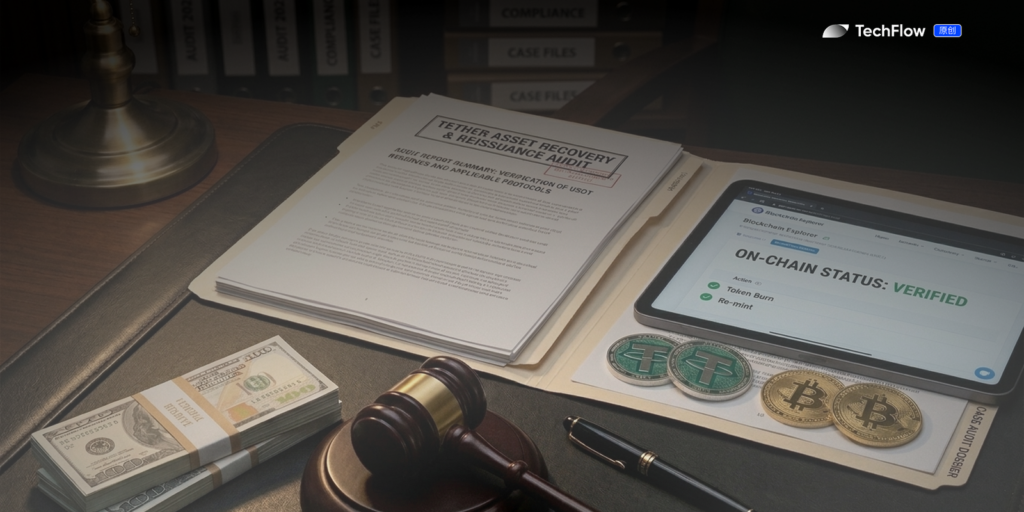
Tether’s outside lawyers reportedly quoted some victims of hacks and telecom fraud fees of up to 20% of their frozen USDT to recover the funds. TechFlow, citing overseas media investigations on November 25, 2026, said the quotes concerned cases involving millions to tens of millions of dollars. The report describes fees quoted, not necessarily paid, and does not establish a blanket 20% rate.
What the public fee schedule covers
Tether’s published recovery guide addresses a different problem: users who mistakenly send tokens to the wrong address or smart contract. For individual transfers above $1,000, the guide generally lists a processing fee of up to 10%, subject to a $1,000 minimum, plus a nonrefundable verification fee.
On a hypothetical $10 million balance, the 10% processing fee would be $1 million. A 20% recovery fee would be $2 million. That illustrates the difference in price; it does not mean a theft victim qualifies for the mistaken-transfer rate.
Why a freeze is not a refund
Blacklisting an address stops USDT from leaving it, but does not transfer the balance back to the victim. To return the funds, Tether must use its smart-contract administrator key to burn the frozen tokens and mint an equal amount of USDT at an address the victim designates.
Establishing who owns the funds can take much longer. Claimants often face repeated identity and source-of-funds checks, and recovery can depend on court forfeiture orders and cooperation among law enforcement agencies in several countries. If the original address holder challenges the reissue, Tether could face civil liability. According to TechFlow, Tether has argued that overseas investigations, legal fees and potential litigation costs account for the higher charges.
Some lawyers representing victims question how those costs translate into a fee of up to one-fifth of the frozen balance. Critics point out that victims cannot turn to a competing provider to reissue Tether’s tokens. Supporters and compliance specialists make the reverse argument: without the issuer’s intervention, stolen assets might be lost entirely, whereas a completed recovery at a 20% fee would leave the victim with 80%.
Both arguments turn on the same power: only the issuer can reissue the frozen USDT. The reporting explains why that process carries legal costs, but does not establish how those costs compare with the fees quoted in individual cases.