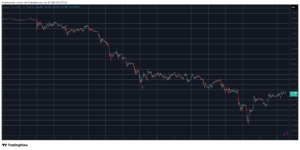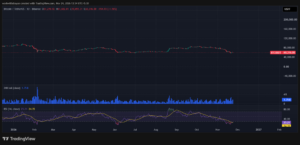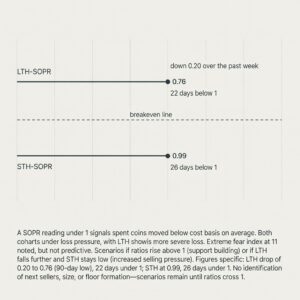
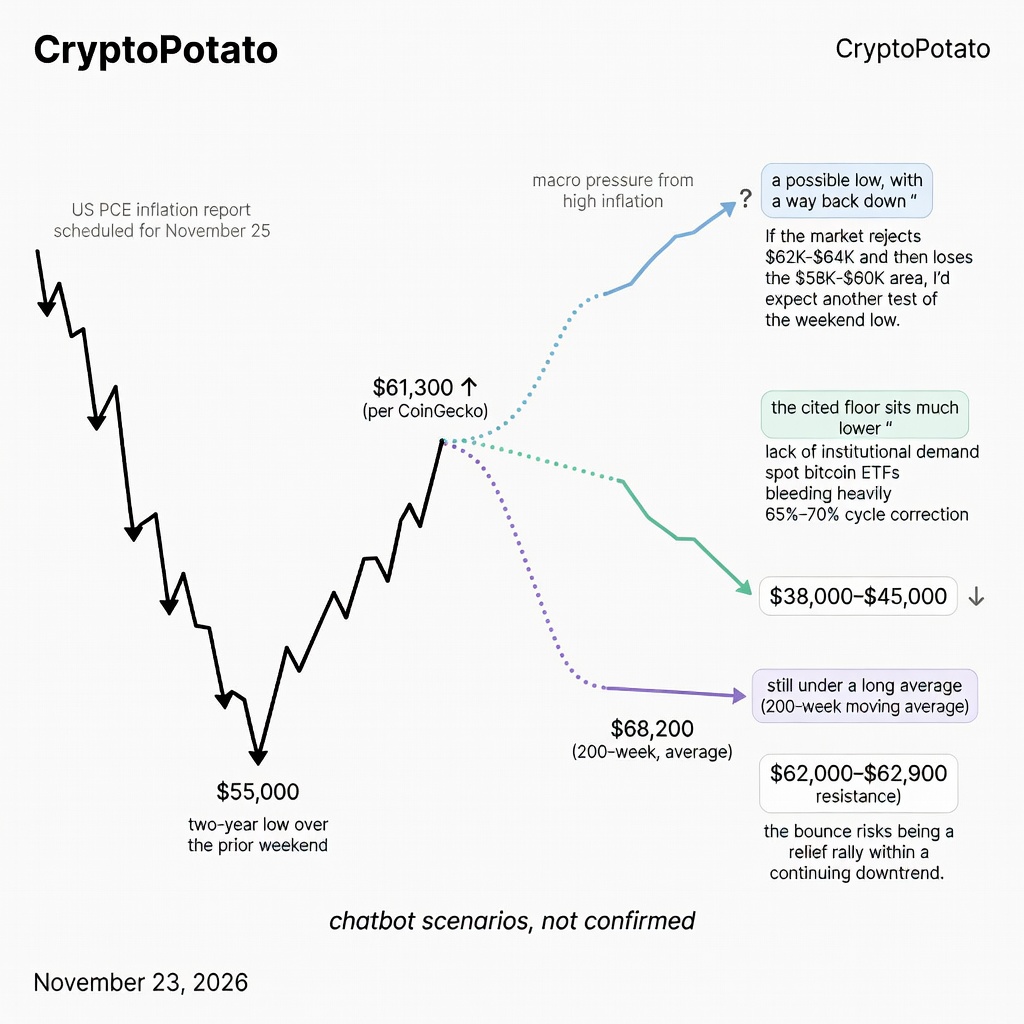
In a CryptoPotato report dated November 23, 2026, Bitcoin — then still the largest cryptocurrency by market value — was described as coming off rough weeks that ended in a two-year low of approximately $55,000 over the prior weekend. The piece said buyers halted a further decline and that price had recovered to about $61,300 on CoinGecko at the time of writing. The question it posed was whether that weekend low was the cycle bottom. The answers it collected were not exchange prints or a disclosed research note. They were replies from three popular AI chatbots.
Those replies are claims, not confirmed turning points. The report does not show the prompts, the data each system retrieved, or any track record.
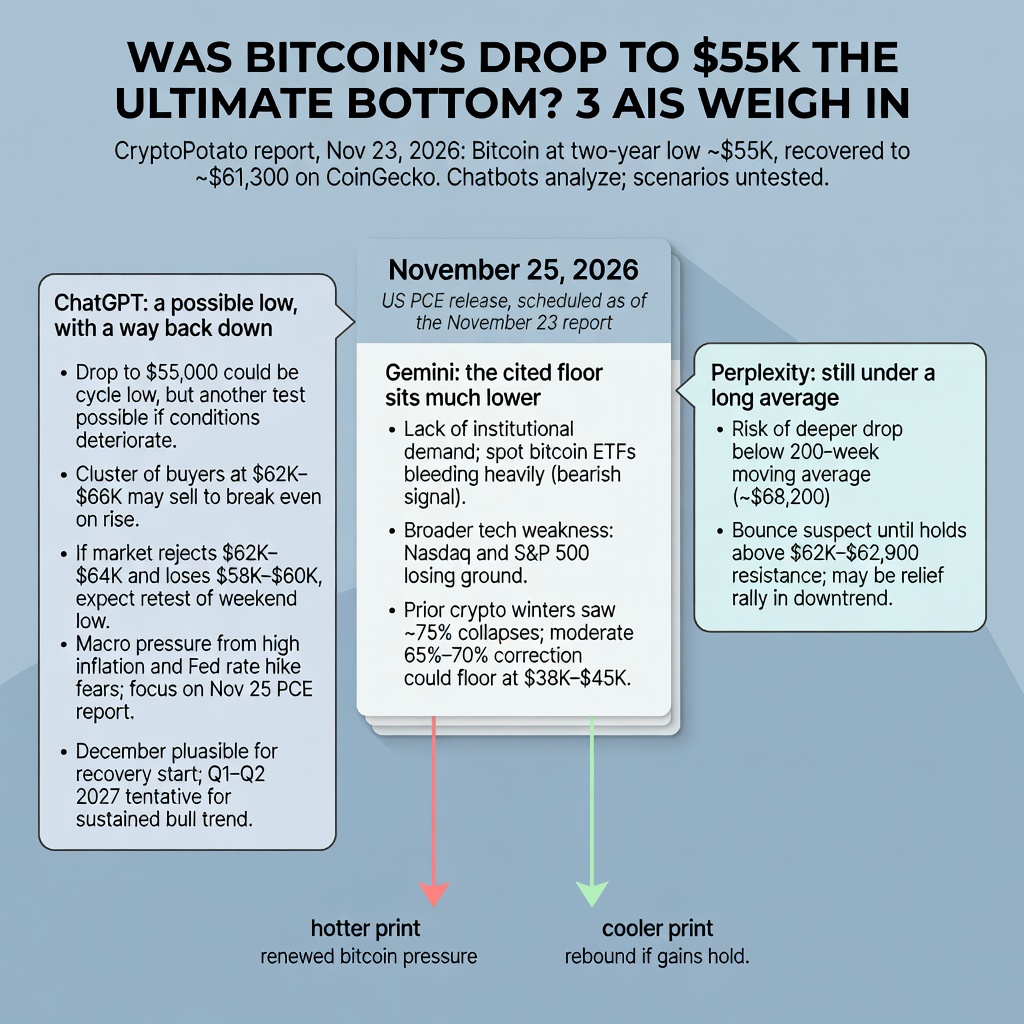
ChatGPT: a possible low, with a way back down
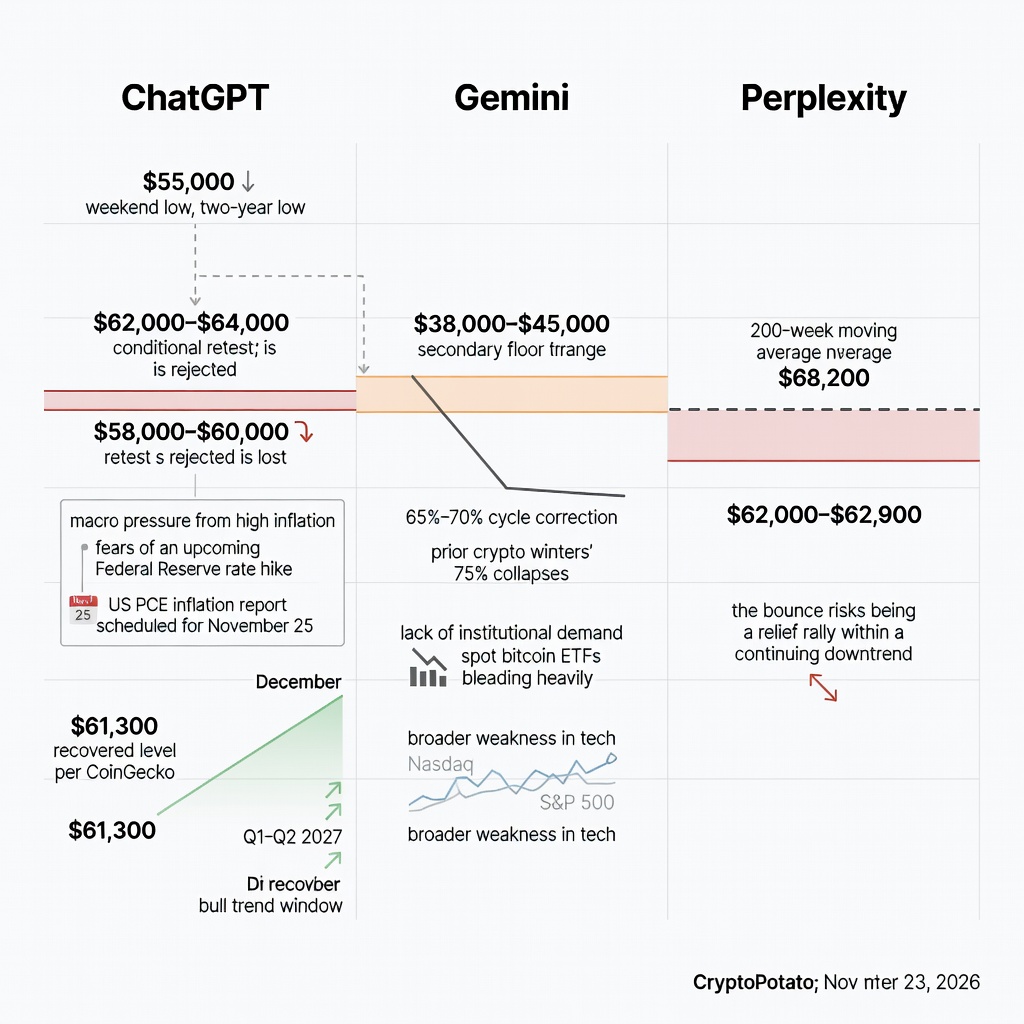
ChatGPT said the drop to $55,000 could ultimately prove to be the cycle low, while warning that another visit to that level could not be ruled out if conditions deteriorated. It described a cluster of recent buyers who had accumulated bitcoin before the crash around $62,000–$66,000, and said a rise into that area might prompt some of them to sell in order to break even.
Its stated condition was specific: “If the market rejects $62K-$64K and then loses the $58K-$60K area, I’d expect another test of the weekend low.”
The chatbot also pointed to macro pressure from high inflation and fears of an upcoming Federal Reserve rate hike — a fear, not a hike the report said had already happened. It singled out the US PCE inflation report scheduled for release on November 25. A hotter print, it said, could reinforce expectations of tighter Fed policy and put bitcoin under renewed pressure. A cooler print could help the rebound, especially if bitcoin held its gains over the following sessions. ChatGPT called December a plausible start for a meaningful recovery and treated the first and second quarters of 2027 as a tentative window for a sustained bull trend. That calendar is the model’s, not an observed regime change.
Gemini: the cited floor sits much lower
Google’s Gemini outlined factors it treated as reasons bitcoin might slip even below $55,000 in the near term. First, it cited a lack of institutional demand and said spot bitcoin ETFs had been bleeding heavily in recent weeks. The report presents persistent outflows, in general, as a bearish signal of weaker appetite among some large investors. It does not attach flow totals, so the “heavily” is Gemini’s characterization as relayed in the piece, not a measured figure supplied alongside it.
Next, Gemini pointed to broader weakness in tech, with the Nasdaq and the S&P 500 also losing ground lately — again without index changes quoted in the article. It also said prior crypto winters had produced collapses of around 75% for bitcoin, and that even a more moderate 65%–70% cycle correction would place a potential secondary floor closer to $38,000–$45,000. That band is the chatbot’s extrapolation. It is not a price the report says had been reached.
Perplexity: still under a long average
Perplexity agreed with the steeper-decline thesis. It said bitcoin remained at risk of a deeper drop as long as it stayed below the 200-week moving average, which it placed near $68,200. Until price could hold above a $62,000–$62,900 resistance zone, it concluded, “the bounce risks being a relief rally within a continuing downtrend.”
What the report actually pins down
The observed market levels in the November 23, 2026 piece are narrow: a weekend low of approximately $55,000, called a two-year low, and a later reading near $61,300 on CoinGecko. The rest — whether $55,000 holds, whether $62,000–$66,000 becomes supply, how a November 25 PCE print would land, whether December or early 2027 starts a bull phase, how large ETF outflows or equity losses were, and whether a 65%–75% drawdown path applies — is attributed to the chatbots.
Three fluent models can still describe three untested scenarios. One treats the weekend low as a possible cycle floor that might be retested. Another sketches a hypothetical secondary zone in the high $30,000s to mid-$40,000s. A third says the bounce is suspect below about $68,200 and, more immediately, below roughly $62,000–$62,900. None of that is a confirmed bottom, and none of it is a case for a trade.