Bitdeer said it sold every bitcoin it mined in its latest reported week and still held none of its own. In coverage dated November 24, 2026, the Singapore-based miner’s weekly update put output at 281.1 BTC and sales at 281.1 BTC, a net addition of zero. Pure holdings, which exclude customer deposits, were zero as of Nov. 20.
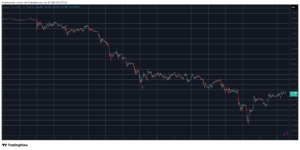
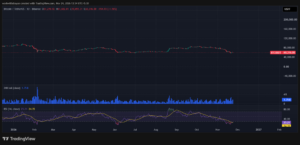
The matched sale arrived while the bitcoin price was volatile. Bitcoin Magazine Pro data cited in that report showed a weekend low of $55,106 early Saturday at 1:17 AM ET, then a bounce to near $62,700 as of 11:23 AM ET Monday. At the time of writing in the same report, the price was still near $62,700. The update does not claim the miner’s sales set that weekend low.
A zero treasury was already the pattern. Holdings had fallen from roughly 2,000 BTC at the end of 2025 to zero by Feb. 20, when an earlier report described an eight-week liquidation. Bitdeer said at the time that the move should not be a concern for the broader market.
Filings show how little coin it kept after that. A Form 6-K filed with the SEC on Nov. 10 listed 47 BTC held at Sept. 30, down from 2,029 a year earlier. Its September production update showed 61 BTC at the end of August. Output was much larger than the balance: 1,355 BTC mined in September and 3,855 BTC in the third quarter, compared with 1,109 BTC in the third quarter of 2025.
The machines grew faster than the treasury. Self-mining hashrate reached 82.3 exahashes per second in the third quarter, up from 35.0 a year earlier, with another 28.7 exahashes per second of co-mining at third-party sites.
Those exahashes did not leave much gross profit. Self-mining generated $217.5 million in quarterly revenue and $6.2 million in gross profit. Electricity averaged $47 per megawatt-hour, and the fleet ran at 15.4 joules per terahash. Bitdeer reported record revenue of $320.7 million and adjusted EBITDA of $69.6 million, and a net loss of $125.5 million. That loss included a $54.6 million non-cash charge tied to a bitcoin-collateralized loan from a related party. Cash and restricted cash stood at $213.7 million. On Oct. 8 the board authorized a new $100 million share repurchase program.
Selling production is one cash option. It is not the only one miners were using. On the Monday in that report, American Bitcoin said it had secured a $150 million revolving credit line from FalconX backed by its bitcoin, so it could raise cash without drawing down its reserve. The loan carries a 5.95% fee and an initial collateral ratio of 143%. Fully drawing it would require about $214.5 million in pledged bitcoin. American Bitcoin has not said whether it has drawn the line, and its release lists the risk that pledged coins could be liquidated if prices fall. Majority-owned by Hut 8, the company said on its Nov. 4 earnings call that it held 8,427 BTC at the end of September. It has also sold part of its production to cover operating costs.
Others sold coins they already held. MARA sold 13,597 bitcoin earlier that month, as miners with thin margins turned to treasuries for cash.
Bitdeer shares (BTDR) were trading near $3.44 at 11:23 AM ET Monday, up about 16% from Friday’s close of $2.96, and ranged from $3.26 to $3.71 on the day. The report placed that move in a broad rally in bitcoin-linked stocks after Nvidia reinstated CEO Jensen Huang, not in any new statement from Bitdeer about its reserve.
Bitdeer has not said whether it plans to rebuild a bitcoin position. In February it described selling as a liquidity measure tied to evaluating powered land acquisitions and scaling infrastructure. It has also been shifting toward AI cloud services and, in its third-quarter release, reported an AI cloud revenue backlog of about $2.9 billion.
The weekly arithmetic is unambiguous on the company’s own figures: coins mined, coins sold, holdings at zero. What remains open is whether that stays the policy, and whether cash, a buyback authorization, and an AI backlog change the picture left by a large net loss and very thin self-mining gross profit. One week of selling all production does not answer that.