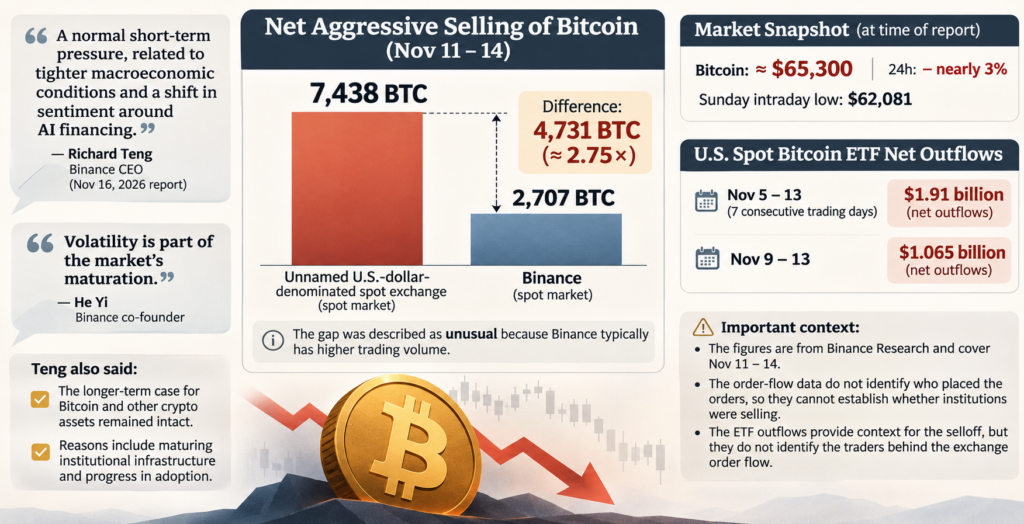
In a report published November 16, 2026, Binance CEO Richard Teng described Bitcoin’s recent decline as normal short-term pressure. In a post on X, he attributed it to tighter macroeconomic conditions and a shift in sentiment around AI financing. Teng said the longer-term case for Bitcoin and other crypto assets remained intact, citing maturing institutional infrastructure and progress in adoption. Binance co-founder He Yi separately called volatility “part of the market’s maturation.” Those are their assessments, not an explanation established by the trading data.
Binance Research reported that, from November 11 to 14, aggressive sell orders exceeded aggressive buy orders by 7,438 BTC on an unnamed U.S.-dollar-denominated spot exchange. The comparable figure on Binance was 2,707 BTC—a difference of 4,731 BTC, or roughly 2.75 times as much net aggressive selling on the unnamed exchange. The research unit called the gap unusual because Binance typically has higher trading volume. The figures do not identify who placed the orders, so they cannot establish whether institutions were selling.
At the time of the report, Bitcoin was around $65,300, down nearly 3% over 24 hours; it had reached $62,081 during Sunday trading. U.S. spot Bitcoin ETFs recorded $1.91 billion in net outflows across seven consecutive trading days from November 5 to 13, including $1.065 billion from November 9 to 13. The outflows provide context for the selloff, but they do not identify the traders behind the exchange order flow.