
As reported on November 17, 2026, defensive Bitcoin options positions had overtaken a prominent bullish trade on Deribit. Citing Deribit data in a November 16 report, Bloomberg said the $60,000-strike put had about $900 million in notional open interest, compared with $867 million for the $100,000-strike call that had previously led. Bitcoin had fallen below $65,000, and traders were preparing for the possibility of a move toward $60,000.
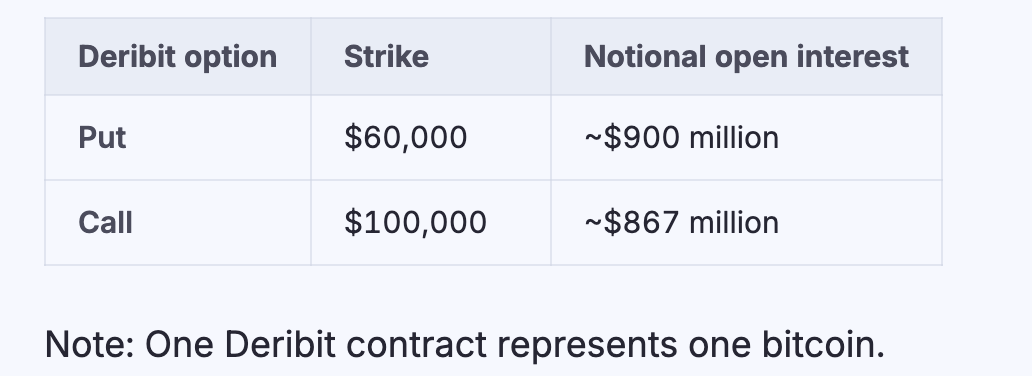
That shift shows greater demand for downside exposure or protection; it does not mean $900 million has been wagered on Bitcoin breaking below $60,000. Nicolas Quatravaux, Paradigm’s head of institutional coverage, attributed the put’s rise both to hedging after the decline and to traders closing $100,000 calls as spot prices weakened. Orbit Markets co-founder Caroline Mauron said options skew had briefly reached 25 points in favor of puts during the recent drop.
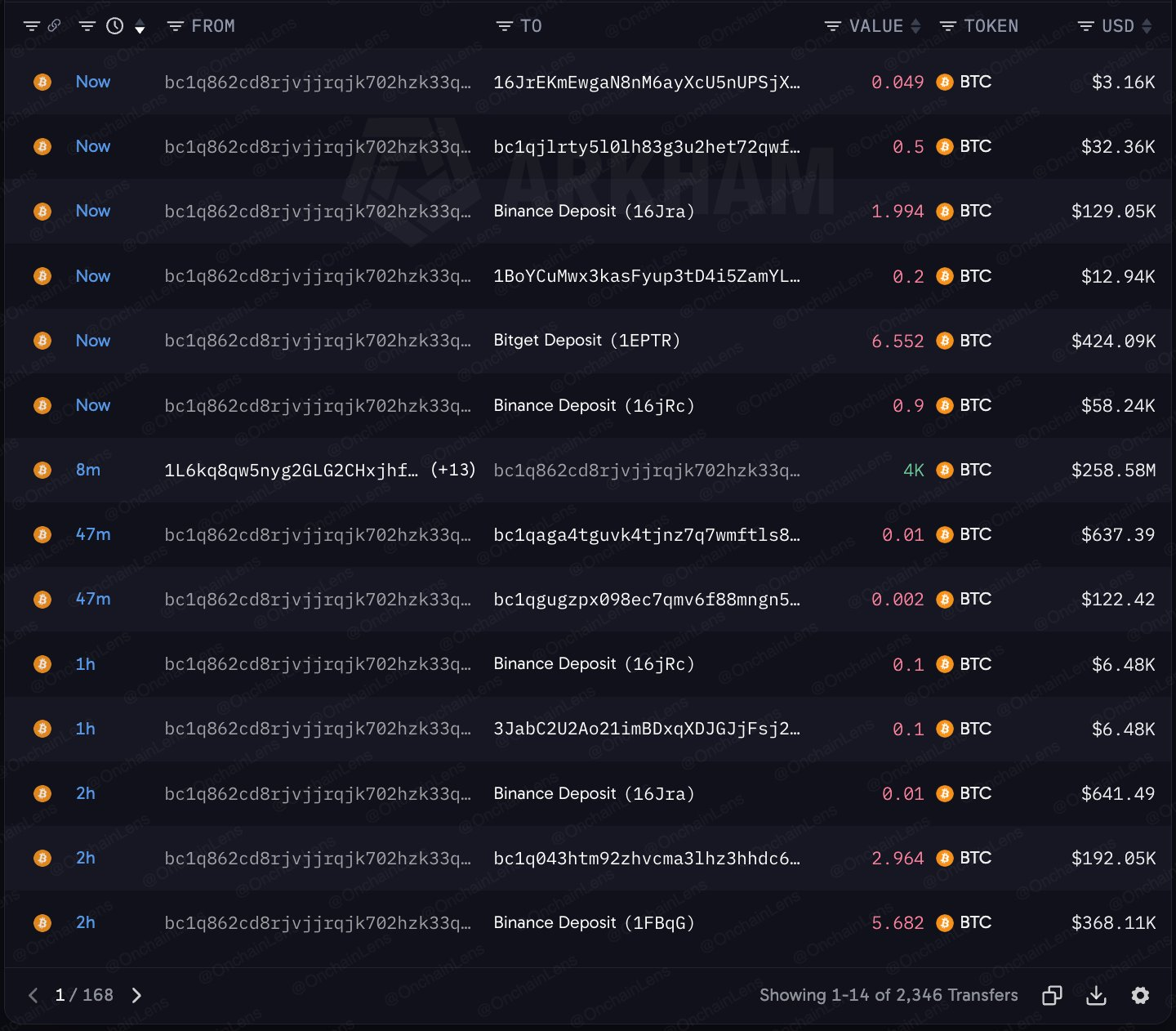
Exchange transfers added another concern, though their purpose remains uncertain. According to on-chain tracker OnchainLens, a wallet beginning bc1q862cd8rjvjjrqjk702hzk33qqu7m7ulehusw6s recently received another 4,000 BTC, valued at roughly $258 million. Over the following 24-hour period described in the report, it sent 347 BTC, worth about $22.4 million, in batches to Binance, Bitget and BIT. Those transfers are observable activity, not confirmation that the coins were sold or that the wallet belongs to an institution.

Mauron described $60,000 as a level that had held twice during the year and warned that a sustained break could expose a stretch with little evident trading-volume support before $40,000. That is her assessment of market structure, not a forecast that Bitcoin will reach either price. Bloomberg Intelligence ETF analyst Eric Balchunas, meanwhile, said year-to-date spot Bitcoin ETF outflows remained modest relative to the price decline, while weaker technology stocks and broader liquidity were putting pressure on crypto assets.