
Originally reported by 深潮 TechFlow on November 11, 2026, at 11:27 a.m. UTC+8. The article is a translation of an essay by washed; its account of Crypto Twitter is the author’s assessment, not a measured finding about the whole community.
Washed argues that Crypto Twitter (CT) is losing the quality that once made it useful: public exchanges among people finding early opportunities. In the author’s telling, competition for those opportunities has intensified while building an audience—and selling that audience a chance to get rich—has become an opportunity of its own.
The comparison comes from communities washed says they followed or joined, including sneaker-reselling and “Money Twitter.” In sneaker reselling, the author recalls sellers racing to list shoes before receiving them as margins tightened. In Money Twitter, the author saw some participants shift from operating businesses to selling courses, information products or advertising. Washed explicitly cautions that paid information is not inherently worthless; the concern is what happens when selling access to an opportunity becomes more attractive than pursuing it.
The author sees both pressures in memecoins: an increasingly competitive trading game alongside influencers promoting the prospect of outsized gains. As an example of how a story can acquire promotional value, washed says a widely circulated claim that Kimchi made $40 million on TRUMP began as a joke invented by a friend. That account is washed’s claim, not a fact independently established by the supplied article.
Washed further argues that valuable discussion has moved from the public timeline into Telegram, Discord, smaller private groups and direct on-chain activity. The essay does not establish how much discussion has moved, and it acknowledges that some public accounts still share useful work without promoting dubious offers.
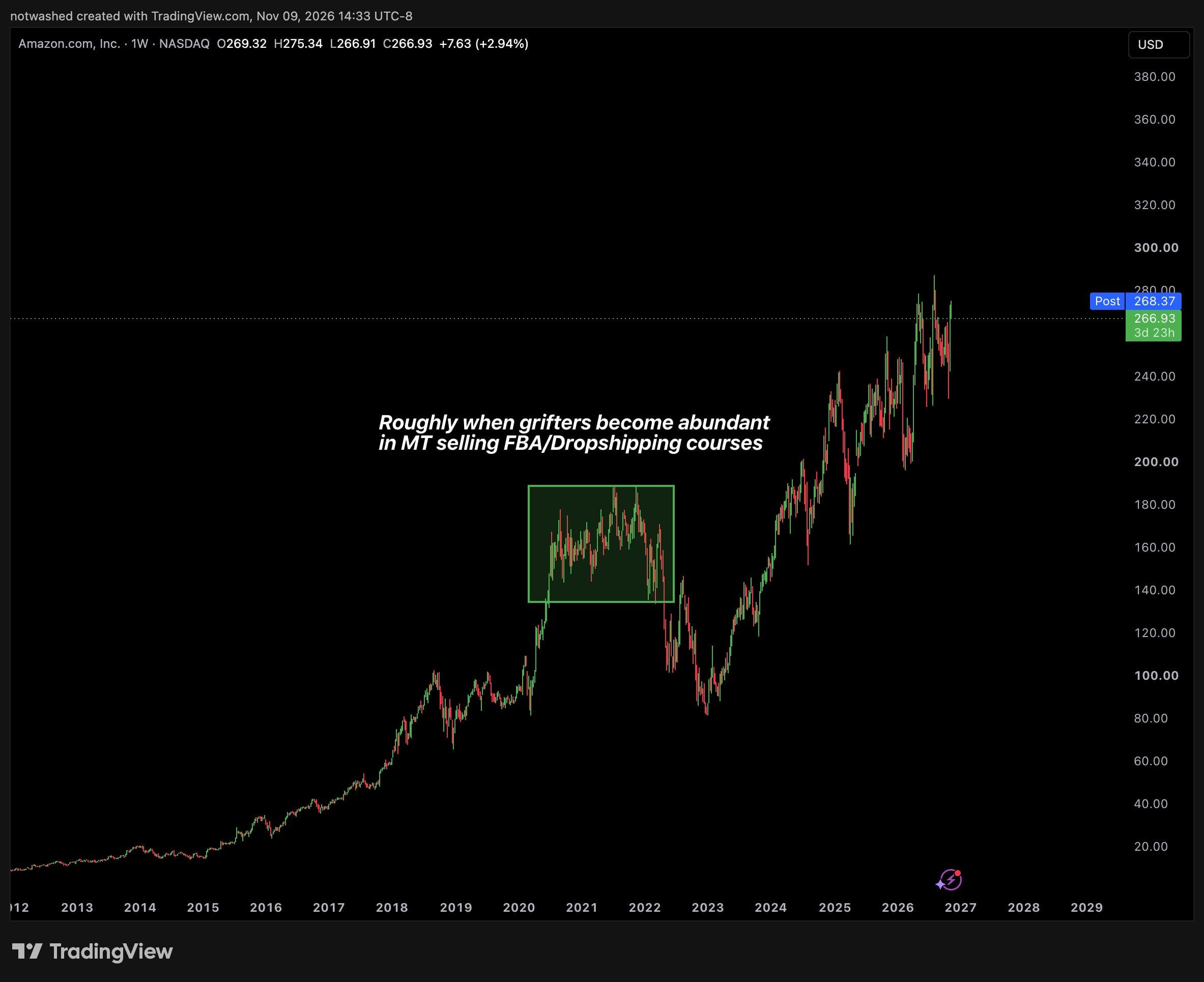
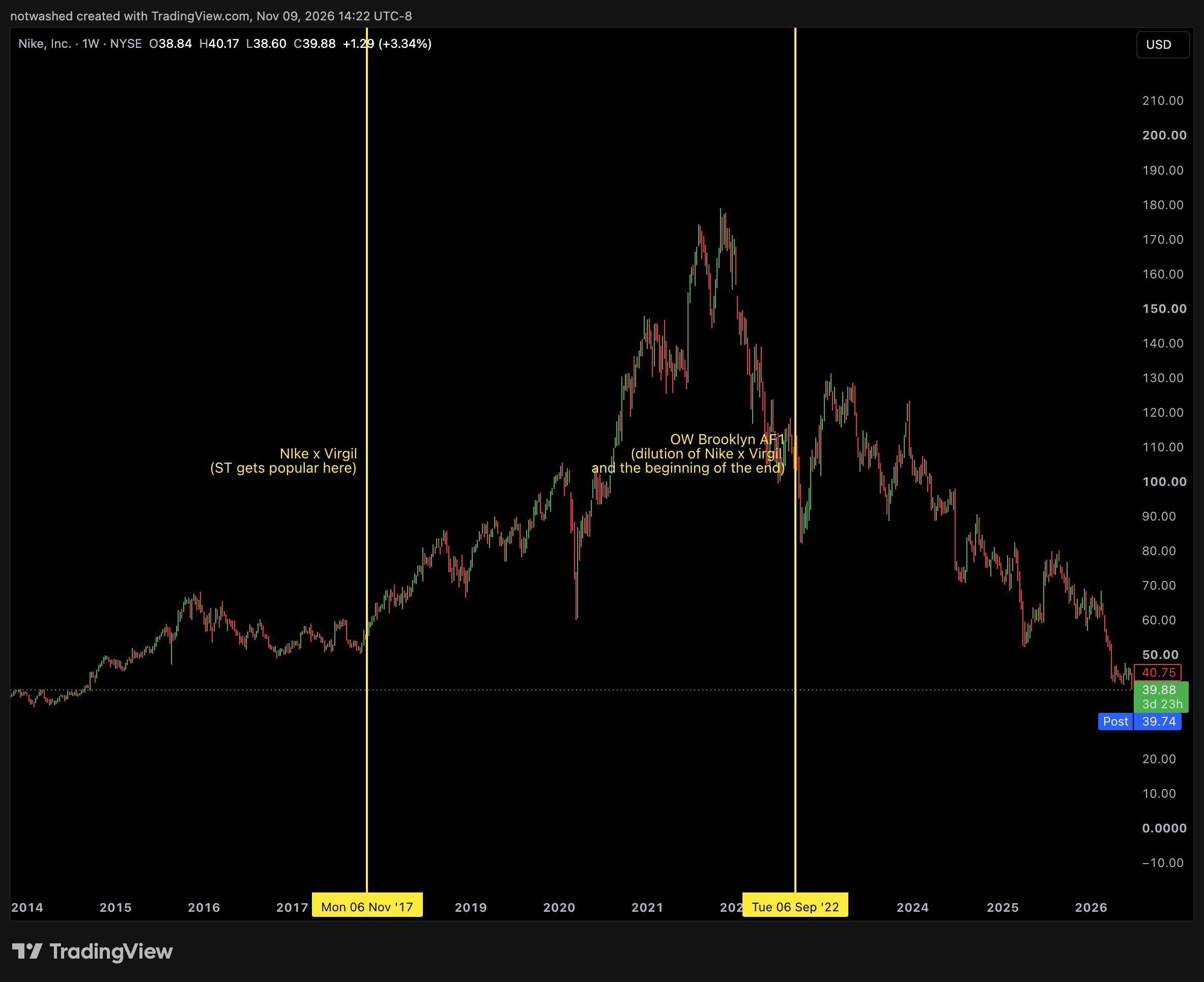
The distinction is between a social feed and the industry it discusses. Washed believes Bitcoin and blockchain have a longer-term future even if CT becomes less relevant to it. The essay’s Nike and Amazon stock-chart comparisons illustrate that view, but neither chart demonstrates that a social community has peaked or predicts where crypto goes next. For readers assessing a speculative claim, a large audience is not evidence that the opportunity being advertised still exists.