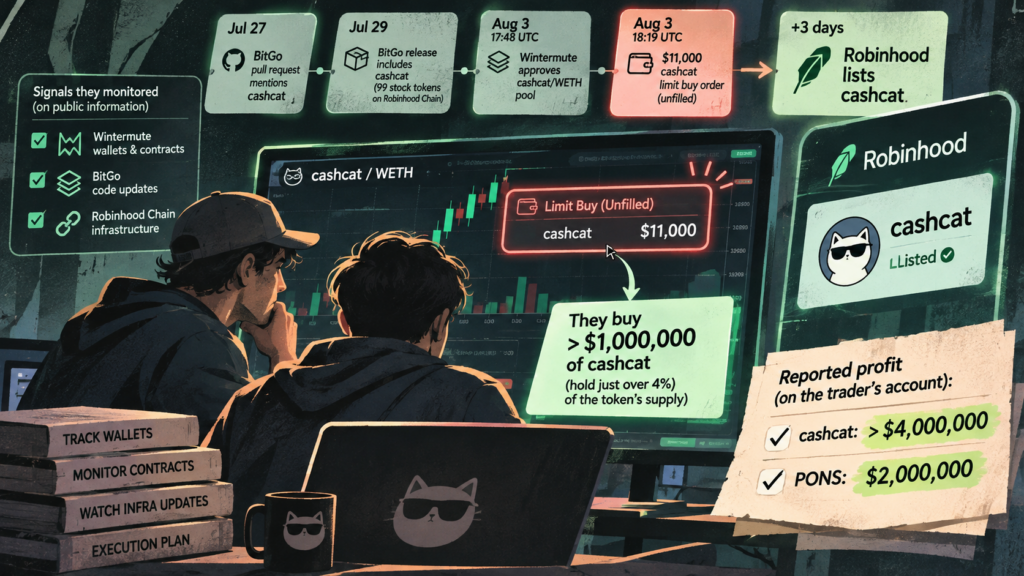
A trader says a visible $11,000 cashcat buy order changed how he and a partner executed a bet of more than $1 million. In an account published on November 16, 2026, he said they abandoned a gradual buying plan after spotting the order, then held just over 4% of the token’s supply before Robinhood listed it three days later. He reported a combined profit of more than $4 million. Those profit figures and the order’s significance come from the trader’s account, not independently verified records in the report.
The signals before the order
The trader said he began watching Robinhood Chain infrastructure after noticing, in an earlier listing, that market maker Wintermute had transferred a token to a Robinhood hot wallet about an hour before the announcement. He subsequently monitored Wintermute wallets and trading contracts, along with public updates from custody partner BitGo.
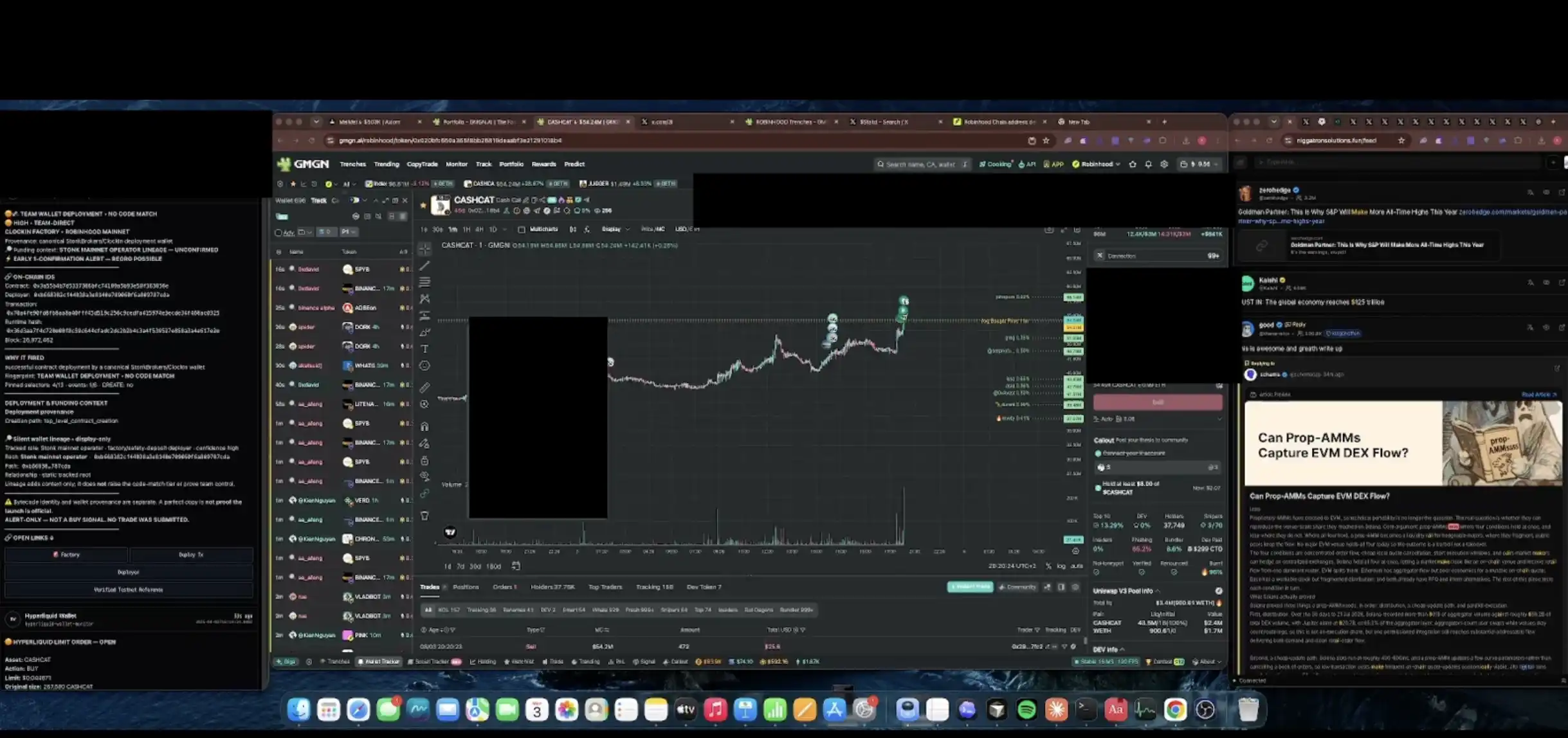
On July 27, cashcat appeared in a public BitGo pull request. That alone did not identify which BitGo client wanted support for it, the trader acknowledged. On July 29, a BitGo release included cashcat alongside 99 stock tokens on Robinhood Chain. He took that as stronger evidence of a Robinhood connection. By then, he said, he and his partner held 1.5% of cashcat’s supply.
At 17:48 UTC on August 3, his tracker detected Wintermute’s approval of the cashcat/WETH pool. The pair planned to buy more gradually to avoid moving the price. At 18:19 UTC, a wallet they suspected belonged to a Robinhood insider placed an unfilled $11,000 cashcat limit buy order. The trader said they had watched the address appear before other listings and believed other traders were watching it too. The wallet’s owner and the trader’s insider suspicion remain unverified.

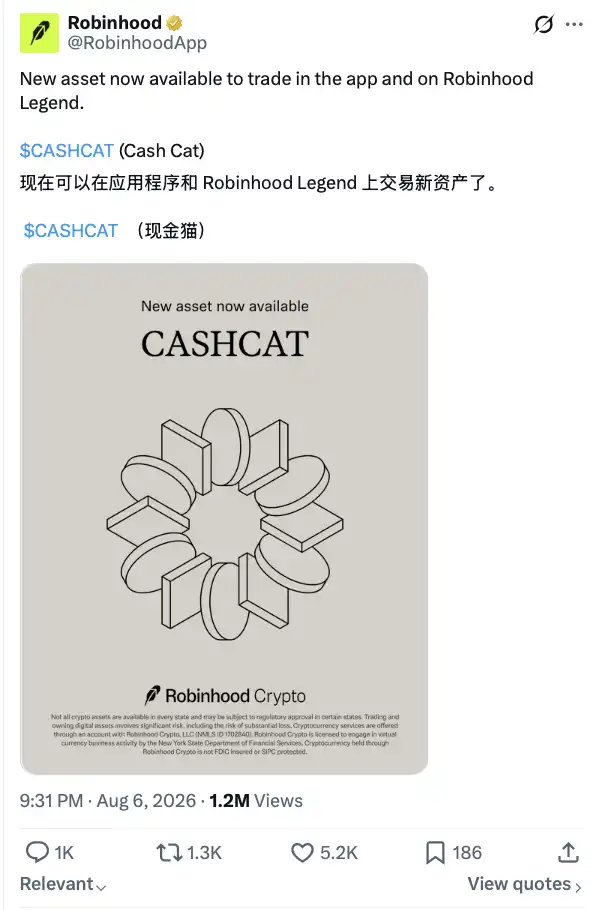
The pair then bought more than $1 million in cashcat rather than completing their gradual plan, according to the account. The trader said their buying pushed up the price and that other accounts soon posted their wallet addresses, fueling listing speculation. Robinhood listed cashcat three days after August 3.
A second trade, and a larger unanswered question
The trader also said he began buying PONS on August 28 after following other signals he did not disclose. He reported that BitGo added PONS three days later, Wintermute subsequently began making a market in it, and PONS was ‘listed’ on September 2. He and friends made a combined $2 million on that trade, he claimed. His suggestion that the PONS episode was a Robinhood trap to identify an insider is speculation, not an established finding.
The account illustrates how public infrastructure changes and visible orders can become trading signals—and how quickly the resulting buying can advertise itself. It does not establish who controlled the $11,000-order wallet or independently substantiate the claimed profits.